Flat roof problems rarely begin with sudden failure. In most commercial buildings, they develop gradually, with early warning signs appearing long before disruption becomes unavoidable.
For Facilities Managers, the challenge is not spotting dramatic damage. It is recognising which early indicators matter, which can be monitored, and when something has crossed the line into requiring planned action.
Understanding these early warning signs can help reduce risk, avoid reactive repairs, and support more confident long-term maintenance decisions.
Flat roofs are designed to perform quietly. When they are working as intended, there is little reason to think about them day to day.
By the time a leak becomes visible internally, the underlying issue may have been present for months.

Standing water that remains long after rainfall has stopped is one of the clearest early indicators of flat roof performance issues.
Occasional ponding can be normal on some flat roofs. However, persistent ponding or new pooling areas may indicate:
Blocked or underperforming drainage
Deterioration of roof falls
Localised structural movement
Over time, standing water accelerates membrane wear and increases the likelihood of failure.
If repairs are repeatedly required in the same areas, the issue is rarely isolated.
This often points to:
Moisture trapped within the roof build-up
Movement affecting joints or details
A roof system approaching the end of its service life
At this stage, ongoing patch repairs tend to increase cost without improving overall performance.
Not all early warning signs appear on the roof surface.
Internally, Facilities Managers may notice:
Light ceiling staining that fades and reappears
Localised damp patches without obvious leaks
Changes in temperature or humidity beneath roofed areas
Individually, these signs may seem minor. Together, they often indicate declining roof performance.
Roof edges, parapets, rooflights, and service penetrations are common weak points where early deterioration becomes visible.
Warning signs include:
Cracking or lifting at edge details
Splits around rooflight upstands
Sealant failure at service penetrations
Water ingress often begins in these areas long before widespread membrane damage is apparent.
When a flat roof requires more frequent attention but overall performance does not improve, this is a strong indicator that reactive maintenance is no longer effective.
This stage is often characterised by:
Rising maintenance costs
Unpredictable performance
Difficulty prioritising repairs
This is usually the point where planning becomes more valuable than patching.
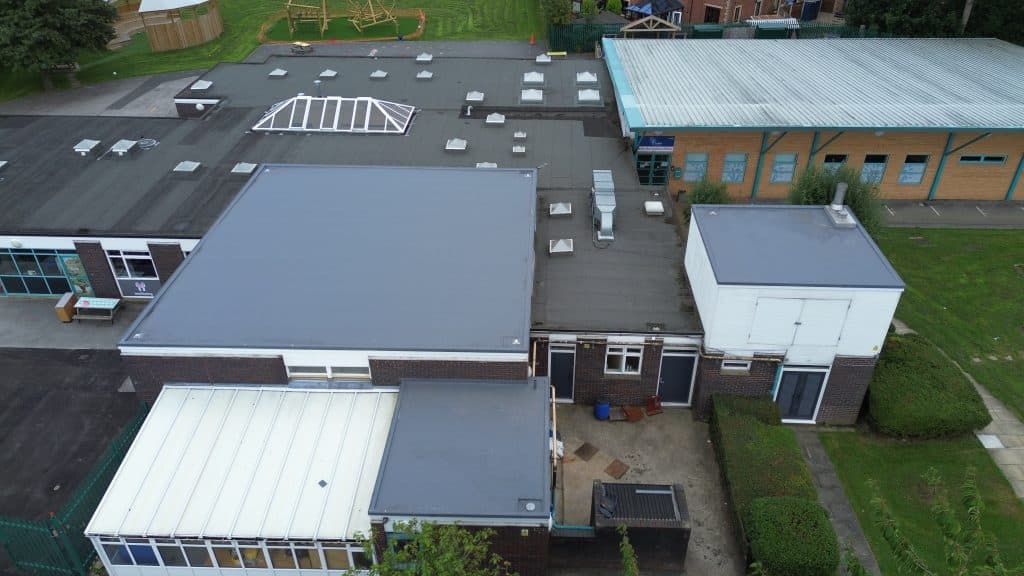
Not every early warning sign requires immediate intervention. However, when several indicators appear together, the risk profile changes.
This is typically when a structured roof inspection or condition assessment becomes useful, helping to:
Confirm the extent of deterioration
Separate short-term fixes from longer-term solutions
Support phased maintenance or refurbishment planning
Early planning at this stage often reduces disruption and long-term cost compared to waiting for failure.
A condition-led approach to flat roof maintenance allows Facilities Managers to:
Build a clearer understanding of roof performance
Make informed decisions rather than assumptions
Align roof maintenance with wider asset management strategies
This approach does not require committing to major works early. It provides clarity, allowing decisions to be made before pressure increases.
Flat roof problems rarely appear without warning. The early signs are usually present but easy to dismiss when buildings remain operational.
By recognising patterns rather than isolated issues, Facilities Managers can move from reactive maintenance to planned action, reducing risk and supporting better long-term outcomes.
This is often the stage where a professional roof inspection or condition review helps clarify next steps and prioritise maintenance planning.
Please send CV and supporting documents to info@ddroofingltd.co.uk and we will contact you when we have demand for your specific skills