Flat roof problems can be a persistent headache for facilities managers. For businesses and organisations across the North of England – from Leeds and Manchester to Sheffield, Newcastle, and York – the decision between repeatedly fixing leaks (reactive repairs) or investing in a planned refurbishment is crucial for cost control and building longevity. In our previous blog on early warning signs of flat roof problems, we discussed how catching issues early can prevent major damage. Now, we take that a step further: when does it become more cost-effective to stop patching up a flat roof and opt for a full refurbishment instead? This post is tailored to facilities teams weighing reactive repairs vs. planned refurbishment, and it supports inspection-led, budget-conscious decisions to manage flat roof issues proactively.
It’s important to recognise early warning signs of flat roof problems and understand how minor issues can escalate. Small leaks, ponding water, blistering in the membrane, or cracks in the roofing surface might seem manageable at first. Many facilities teams handle these with quick patches or other reactive repairs to address the immediate problem. However, if these warning signs are ignored or only ever given short-term fixes, they tend to recur and worsen over time. A drip from the ceiling in a Manchester office, for example, might be solved with a patch today, but if the underlying cause (like a deteriorating membrane or blocked drain) isn’t resolved, that leak can return along with new ones in other areas.
Repeated small repairs not only add up in cost, but they can also mask deeper issues. Flat roof problems often indicate aging materials or systemic issues with the roof’s design or installation. Continually spending on stop-gap fixes is like repeatedly putting plasters on the same wound – eventually, a more substantial treatment will be needed. As we highlighted in our earlier discussion on early warning signs, there comes a point when “monitoring should become planning” – meaning it’s time to shift from just watching and patching problems to actively planning a long-term solution. The longer you delay, the higher the risk that a minor issue turns into significant damage affecting insulation, structural decking, or interior assets. In short, early warning signs exist for a reason: they’re prompting you to plan ahead and possibly consider a refurbishment before costs spiral out of control.

From a cost control perspective, frequent roof repairs can quietly drain maintenance budgets. On the surface, a £300 patch job here or a £500 leak repair there seems far cheaper than a lump-sum refurbishment. But when those fixes become a regular occurrence – say monthly call-outs each winter in Leeds or York due to persistent rain – the cumulative expense over a few years can rival or even exceed the cost of a one-time refurbishment project. Industry experts note that while repairs are often more affordable initially, “recurring issues can add up over time”, eroding any short-term savings. In other words, that cycle of constant fixing is false economy if the roof’s condition is deteriorating.
Consider the hidden costs of reactive maintenance as well. Every emergency leak can disrupt business operations – perhaps shutting down an office floor in Sheffield for a day or risking damage to equipment or stock in a Newcastle warehouse. There are also indirect costs: repeated water ingress might lead to mold remediation, damaged electrical systems, ruined interiors, or even health and safety issues for staff. All these factors translate to extra expenses beyond the roofer’s invoice.
By contrast, a planned flat roof refurbishment is a proactive investment. Yes, the upfront cost is higher, but it often addresses the root cause of roof problems in one project – renewing the waterproofing across the entire surface, improving insulation and drainage, and essentially “resetting” the roof’s lifespan. This can eliminate the need for constant patch-ups. When timed correctly, a refurbishment can actually save money over the roof’s lifecycle. For example, a business that switches to a refurbishment will likely spend far less on emergency call-outs and interior damage over the next 10–15 years. Some facilities managers find that over the long term, proactive roof work saves thousands annually in avoided repair and downtime costs. In essence, cost control isn’t just about choosing the cheapest immediate option – it’s about minimising the total cost of ownership of your roof. And often, that means recognising when ongoing repairs have become a money pit and a more comprehensive solution is the smarter financial choice.

Every roof has a finite service life. Lifecycle planning means looking at your roof’s overall lifespan and scheduling major maintenance or refurbishment at optimal times, rather than simply reacting to failures. A proactive flat roof refurbishment can significantly extend the life of an aging roof and improve its performance, aligning with long-term budget planning for facilities.
If your flat roof is, say, 15-20 years old (common for many commercial properties in cities like York or Manchester), it may be nearing the end of its designed lifespan. While you might eke out a few more years with patches, the diminishing returns become apparent: each repair fixes one symptom, but the underlying aging continues. By contrast, investing in refurbishment (for example, adding a new membrane layer or a liquid waterproof coating) can add another decade or more of reliable service life to the roof. This aligns with planned maintenance cycles and prevents the roof from reaching a crisis point.
Planned refurbishment also gives an opportunity to upgrade the roof’s specifications. For instance, when refurbishing, you can improve insulation to modern standards, which enhances energy efficiency and reduces heating costs for your facility. A new single-ply flat roofing overlay or a liquid flat roofing system installed as part of refurbishment will not only waterproof the building but often carry new warranties and lower maintenance needs in the coming years. These improvements feed into lifecycle cost savings: a slightly higher spend now can mean significantly lower annual costs moving forward. In fact, a thorough lifecycle cost analysis often shows that replacement or major refurbishment wins out financially when looking at the long-term horizon, especially if the current roof is approaching end-of-life.
From a budgeting perspective, planning a refurbishment allows you to control when the expense hits and avoid unplanned expenditures. You can schedule the project during a quieter season (e.g., summer in the North of England tends to be drier, ideal for roofing work) and budget for it in advance, instead of being surprised by a catastrophic leak in December that forces an immediate (and likely more expensive) response. This kind of lifecycle planning is particularly important for public facilities or businesses that have to justify spend – it’s much easier to get approval for a planned capital project that will prevent future losses, than to explain repeated emergency repairs and their mounting costs.
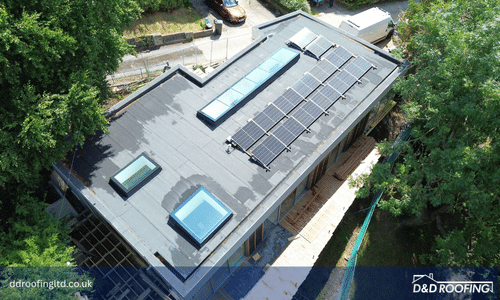
A leaking flat roof isn’t just a nuisance – it’s a risk. Every time water penetrates your roof, there’s a chance of damage to structural elements, electrical systems, or critical assets inside the building. In worst-case scenarios, a roof failure could even pose safety hazards or force a facility shutdown. For example, think of a manufacturing plant in Sheffield having to halt production for several days because a roof leak compromised the electrical supply, or a school in Leeds closing classrooms due to water damage and potential mold. These risks carry heavy costs in terms of lost productivity, disrupted operations, and even reputational damage if clients or occupants are affected.
Proactively opting for a flat roof refurbishment at the right time is a form of risk mitigation. Rather than gambling that the next storm won’t breach that old patch, refurbishment ensures the roof is reinforced and all known weak spots are addressed in one go. You’re essentially resetting the clock on potential leaks. This dramatically reduces the chance of emergency failures. As one commercial roofing guide notes, regular maintenance and timely roof upgrades “reduce emergency repair costs, extend the roof’s service life, and protect the assets inside the building”. In practice, that means fewer surprises – and if there’s one thing facility managers in Newcastle or Manchester can agree on, it’s that fewer 3 A.M. emergency calls about a roof leak is a good thing!
Refurbishment can also improve safety. Ongoing leaks can create slippery surfaces, encourage mold (a health hazard), or even risk ceiling collapses if water pools heavily. By eliminating these issues, you create a safer environment for employees, customers, or tenants. Furthermore, a well-maintained roof keeps insurance companies and regulators happy – many insurers in the UK require that roofs are kept in good condition and may not cover damage if a roof was knowingly in disrepair. So from a compliance and insurance standpoint, reducing risk through proactive work can save you from denied claims or higher premiums down the line.
In short, risk reduction is a key argument for planned refurbishment over reactive fixes. It’s about peace of mind. Facility teams have enough on their plate; pre-emptively solving flat roof problems means one less major risk to juggle. The North of England weather – be it heavy rain, snow, or freeze-thaw cycles – will undoubtedly test your roof. A refurbished roof, done at the right time, is far more likely to withstand these challenges without incident, keeping your operations running smoothly.
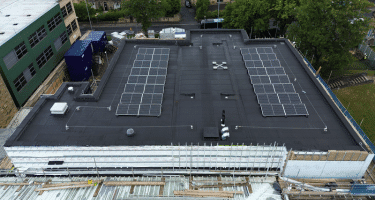
How do you know when that tipping point has been reached – when ongoing repairs are no longer wise and refurbishment is due? The answer lies in inspection-led decision making. An experienced roofing professional should inspect your flat roof regularly (at least twice a year is a common recommendation, typically in spring and autumn, plus after severe weather). These inspections provide an objective assessment of the roof’s condition and help forecast how much longer it can perform with minor maintenance.
During an inspection, experts will identify the extent of damage or deterioration: Are issues localized or widespread? Is the waterproof membrane intact or full of patched areas? Is there water trapped under the roof covering? How is the insulation holding up? The inspector will also consider the roof’s age relative to its expected lifespan. Armed with this information, you can make an informed decision rather than a guess.
Extent of damage – If problems are confined to one corner of a York facility’s roof, targeted repairs might suffice. But if half the roof has cracked felt, blisters, or multiple leak points, that suggests systemic failure. Roofing guidelines often say that if more than about 40-50% of the roof area is compromised, continuing with piecemeal repairs is not cost-effective.
Frequency of issues – A roof that has needed three or four separate leak fixes in the last year is signaling that it’s in decline. Multiple previous repairs indicate the roof may be nearing end-of-life, and additional patching is rarely worthwhile compared to a more comprehensive solution.
Roof age and material – If a flat roof is approaching the end of its expected lifespan (for instance, a 20-year-old EPDM or felt roof), refurbishment or replacement should be planned before failure becomes frequent. As one source puts it, if the roof is over 20 years old or has widespread issues, a replacement offers better long-term protection. Even if not fully replacing, a refurbishment at this stage can stave off problems and reset the clock.
Structural condition – An inspection might find that the underlying deck and structure are still solid, in which case an overlay or liquid flat roofing refurbishment is viable. However, if structural elements (wooden decking, concrete substrate, steel beams) are water-damaged or weakened, those must be fixed – which often means a more extensive project. (In such cases, a full replacement may be necessary, as you can’t simply cover over structural damage.)
Repair costs vs new solution – A professional can help estimate the cost of likely needed repairs over the next few years versus the cost of a refurbishment now. If the math shows that upcoming repairs (and their associated damage control) would amount to, say, over half the cost of renewing the roof, then it’s time to refurbish. In fact, a common rule of thumb is if the cost of patching up a roof starts approaching 60-70% of the cost of a new roof, you should strongly consider the new roof. It simply provides better long-term value.
Using thorough inspections to guide your decisions ensures that you’re neither rushing into an unnecessary replacement nor clinging to a failing roof for too long. It’s a balanced, evidence-based approach. And importantly, it’s budget-conscious – you’ll have the data to justify the expenditure to stakeholders by showing the comparison between continued repairs and a refurbishment.

Knowing the red flags that signal refurbishment is more cost-effective than ongoing repairs can save your organisation both money and hassle. Here are key signs and scenarios where a planned flat roof refurbishment likely makes better financial sense than sticking with reactive fixes:
Chronic Leaks and Frequent Repairs: If your maintenance log shows that leaks are being patched multiple times a year, your roof is crying out for a long-term solution. For example, an office in Newcastle that has called out roofers every few months is probably spending more on cumulative repairs than the price of an overhaul. Frequent leaks indicate underlying issues that patches aren’t resolving.
Widespread Deterioration: Take a good look (or better yet, an inspector will) at the roof surface. Is 30, 40, or 50% of it showing wear – such as alligatoring, cracks, or seam failures? When damage is widespread rather than isolated, refurbishment is usually more cost-effective. Continuously repairing numerous trouble spots across a roof is like whack-a-mole; eventually, an extensive refit will be cheaper than chasing each new leak.
Roof Nearing End-of-Life: Each roofing material has an expected lifespan. If your flat roof is, say, a bitumen felt roof rated for 20-25 years and it’s now in year 18, you are on borrowed time. Instead of pouring money into extending a life that’s almost over, plan a refurbishment or replacement. You’ll avoid the high risk of failure and potentially gain a new warranty. As experts note, when a roof is past ~75% of its lifespan, investing in a new system often provides better value than continual repairs.
Escalating Repair Costs: Compare costs objectively. Add up what you spent on reactive roof work in the last two or three years. Then get a quote for a refurbishment. Many facilities teams in Leeds and Manchester are surprised to find that their reactive repair spend (plus collateral damage costs) would cover a significant chunk of a new roof. If your repair costs are approaching even half the cost of a refurbishment, that’s a clear indicator that the current approach isn’t cost-effective. Remember that ongoing repairs also mean ongoing uncertainty – whereas a refurbishment is a one-time cost that comes with predictable performance.
Planned Building Upgrades or Changes: Sometimes the decision isn’t just about the roof in isolation. If your company is planning major interior refurbishments, installing new equipment, or expanding the building, it can be wise to include a roof refurb in that timeline. The cost of protecting a brand-new office renovation from roof leaks, for instance, far outweighs the refurb cost. And if solar panels or HVAC upgrades are in the works for your Sheffield facility, a tired old roof beneath them is a liability – better to refurbish first so that new investments aren’t put at risk.
If one or more of these signs apply to your flat roof, it’s a strong case that a refurbishment will be more economical and prudent than continuing in reactive mode. Every situation is unique, but these rules of thumb are widely accepted in the roofing and facilities management community.

Once you’ve decided to pursue a refurbishment, the next question is how to do it in the most effective way. There are several refurbishment solutions for flat roofs that can resolve common flat roof problems without the need for a full tear-off (assuming the structure is sound). At D&D Roofing Ltd, we specialise in modern, high-quality systems that renew your roof’s waterproofing and extend its life:
Liquid Flat Roofing Systems: One option is applying a liquid-applied roofing membrane over the existing roof. Our liquid flat roofing solution is a fully bonded, seamless coating that conforms to any roof shape. Liquid coatings are particularly useful for roofs with lots of detail (like skylights, vents, or complex penetrations) because the liquid can seal all those tricky areas flawlessly. They are also quick to apply and cure, minimizing disruption. A new liquid waterproofing layer can seal all leaks, bridge small cracks, and protect the roof for many years. It’s a cost-effective and flexible method well-suited to a variety of commercial properties (we’ve used it on everything from offices in Leeds to warehouses in York).
Single-Ply Membrane Overlay: Another popular refurbishment method is to install a new single-ply membrane over the existing flat roof (sometimes with an insulation upgrade at the same time). We provide professional single-ply flat roofing services across the North of England, using materials like PVC or TPO sheets that are lightweight yet very durable. The new membrane can often be laid over the old roof (if the old surface is prepared properly and any wet insulation is removed). This approach effectively gives you a brand-new roof surface with high performance and reliability, without the cost of fully stripping the old roof. Single-ply systems are known for being UV-resistant, waterproof, and low-maintenance, and they come with manufacturer warranties that ensure peace of mind.
Choosing the right refurbishment method depends on the specific flat roof problems at hand, the roof’s construction, and budget considerations. In some cases, targeted repairs plus a liquid overlay might suffice; in others, a full re-cover with single-ply is more appropriate. Our team will conduct a thorough survey and recommend the best course of action, whether it’s a silicone-based liquid coating for a Manchester school roof that’s starting to crack, or a PVC single-ply overlay for a Newcastle shopping centre with persistent leaks.
Importantly, both of these refurbishment approaches typically cause less disruption to your operations compared to a full roof replacement. We often don’t need to remove the old roof (or only in small areas), meaning your building can stay functional during the works. That’s a big plus for facilities managers concerned about downtime. And by choosing a professional contractor experienced in refurbishments, you ensure the new system is installed correctly so that it truly resolves your roof problems, rather than just covering them up.
(Feel free to explore our case studies on recent flat roof refurbishments we’ve completed for businesses in the North of England – these real-world examples show how proactive roofing solutions saved clients money and hassle.)

Flat roof problems don’t have to derail your budget or operations. The key is to plan ahead. Rather than waiting for the next leak to strike, take a proactive stance. If you’re a facilities manager or property owner in Leeds, Manchester, Sheffield, Newcastle, York, or anywhere in the North of England, consider scheduling a professional roof inspection to assess your flat roof’s condition. An inspection-led approach will give you a clear roadmap – whether it turns out that a few repairs are still sufficient, or that you’d be better off with a refurbishment in the next year.
D&D Roofing Ltd is here to help you make an informed, budget-conscious decision. We pride ourselves on honest assessments and cost-effective roofing solutions. Our team can provide a comprehensive survey and lay out your options in plain terms, weighing the long-term costs and benefits. We’ve helped numerous clients across the North switch from reactive fixes to planned refurbishments that delivered better value and less stress.
Don’t let flat roof problems continue to chip away at your peace of mind (and your maintenance funds). Take control with a planned approach to roof management. Contact us today via our Contact Us page or give our North of England office a call to arrange a FREE flat roof inspection. We’ll help you determine the most cost-effective path – whether that’s targeted repairs, a liquid flat roofing overlay, a new single-ply flat roofing system, or another solution – to keep your building dry, safe, and efficient for years to come.
Your roof is one of your facility’s most critical assets. By making smart decisions now, you can ensure it remains an asset and not a liability. When refurbishment is the wiser choice, D&D Roofing Ltd will deliver a high-quality result that protects your property and your budget. Get in touch with our friendly team and let us help solve your flat roof problems with the right solution at the right time.
(Early planning today means no panicked buckets under leaks tomorrow – a win for both your finances and your sanity!)
Please send CV and supporting documents to info@ddroofingltd.co.uk and we will contact you when we have demand for your specific skills


